Remote work changed how people begin their IT careers in the UK. Many people want to know which jobs are hiring and which ones require a lot of experience. The reality of Remote IT jobs in the UK that candidates face today is that hiring demand varies significantly across support, infrastructure, cloud, and security paths. Below, we explain job levels, expected salaries, important certifications, and the fastest way to get your first job offer. At Impact IT Training, we help people who want to change careers, beginners, and those looking to improve their skills with hands-on training that prepares them for jobs.
Why Remote IT Hiring Keeps Growing in the UK
The demand for work-from-home IT jobs UK candidates search for isn’t a passing trend. Businesses are changing, and their needs are growing, which means there is a lot of demand for hiring tech workers remotely all over the country.
- Normalized Flexible Models: Hybrid and fully remote working is now normalized company policy in the corporate UK.
- Cloud Migration Accelerates: Fast migrations to AWS, Microsoft Azure, and Google Cloud platforms need infrastructure management by engineers from anywhere.
- National Talent Pool Expansion: Facing a national tech skills shortage in the country, organizations look for candidates in England, Scotland, Wales, and Northern Ireland as opposed to just local commuter areas.
- AI & Automation Integration: With the growing adoption of artificial intelligence tools, there is a need for backend support and data structuring.
If you want to switch to an IT career from any other field, these market drivers will make the environment more welcoming for skilled non-traditional applicants.
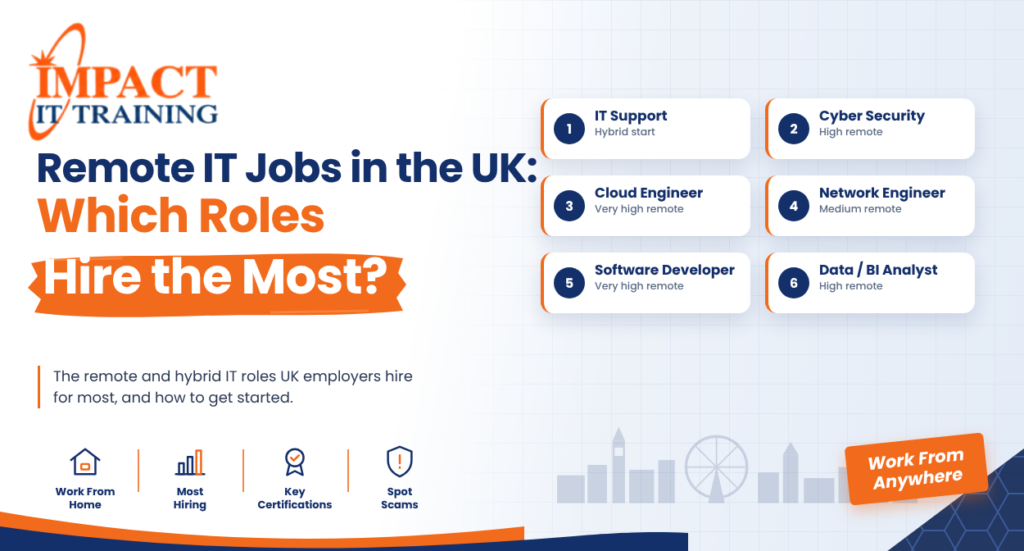
Quick Comparison: Remote IT Roles at a Glance
Below, the main tech paths in the UK that offer flexibility in terms of remote work have been categorized in the following way:
| S.NO | Role | Remote-Friendliness | Entry Barrier | Typical Starting Cert | Salary Range (UK) |
| 1 | IT Support / Service Desk | Medium–High (Hybrid start) | Low | CompTIA A+ | £22,000 – £32,000 |
| 2 | Cyber Security Analyst | High | Medium | CompTIA Security+ | £35,000 – £65,000 |
| 3 | Cloud Engineer | Very High | Medium–High | AWS / Azure Fundamentals | £42,000 – £85,000+ |
| 4 | Network Engineer | Medium | Medium | CCNA / Network+ | £32,000 – £58,000 |
| 5 | Software Developer | Very High | Medium–High | Portfolio-led | £35,000 – £90,000+ |
| 6 | Data / BI Analyst | High | Medium | SQL / Power BI | £30,000 – £55,000 |
Data compiled from ONS ASHE, Indeed UK, and Reed salary tracking metrics (Updated October 2026).
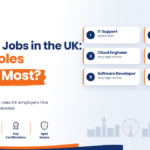
Which Remote IT Roles Hire the Most?
IT support is the UK market leader in terms of the number of jobs available, providing the easiest entry into the sector for applicants. Cloud infrastructure and cyber security follow, spurred by the critical need to protect corporate networks and clouds.
1. Remote IT support
Searching for remote IT support jobs UK-wide will show large search volumes since all businesses require helpdesk support. Remote IT support involves taking care of queues of tickets, user ID access, and solving software issues through remote software control. Although most entry-level IT support roles start as hybrids for smoother onboarding, they remain the single best stepping stone to becoming an established IT support technician.
2. Remote cybersecurity
For remote cyber security jobs UK means looking into careers such as Security Operations Centre (SOC) Analysts, GRC staff, or security administrators. There is huge demand in this area due to strict data privacy laws. But because high security clearance and hardware access are also required, pure day-one remote jobs are rare without foundational training. Understanding core cybersecurity fundamentals is vital before applying.
3. Remote cloud and DevOps
Listings for remote cloud engineer jobs that UK companies provide are among the most flexible jobs out there. The work involves configuring the infrastructure in code and running continuous integration and deployment pipelines for applications running in Docker or Kubernetes containers.
4. Remote network engineering
Job seekers searching for remote network engineer jobs UK-wide can expect great demand for Cisco-certified candidates to deal with virtual private networks, SD-WAN implementation, and network monitoring. An honest disclaimer: since hardware breakdowns need physical intervention, network jobs tend to involve occasional trips to the nearby data centers.
5. Software, data, and AI
Software engineers, data analysts, and AI automation experts have a very high level of remote work flexibility. However, these positions lean heavily toward candidates who already have a project portfolio or experience in coding in real-world situations.
Entry-Level and No-Experience Routes
Can you really secure a position in entry-level remote IT jobs UK candidates target without previous technical experience? Yes, provided you target realistic pathways.
- Realistic Entry Positions: Some examples of such positions are 1st Line Helpdesk Support, Trainee IT Support Assistant, Junior Service Desk Analyst, or Junior Data Coordinator. People looking for remote IT jobs with no experience in the UK can start their journey through these positions.
- The Competition Advantage: 100% remote junior positions will have thousands of applicants applying for them. Applying to hybrid positions first would give you a huge competitive edge since competition would be smaller and companies will feel more comfortable mentoring juniors in person, at least within the first couple of weeks.
- The Fast-Track Blueprint: Get certified, set up a home lab (for example, a free AWS account or an AD domain locally on VirtualBox), list project work in your CV, and apply for positions.
If you need to know about all available beginner-level positions, read our detailed guide on entry-level IT jobs in the UK.
Ready to Begin? With Impact IT Training, we have customized courses for beginners that will provide you with both certification and project experience.
Fully Remote vs Hybrid IT Jobs
Choosing between a fully remote vs. hybrid IT UK job requires job seekers to comprehend how employers build their teams.
| Feature | Fully Remote IT Jobs | Hybrid IT Jobs |
| Flexibility | 100% home-based, work anywhere in the UK | 2–3 days home, 2–3 days office |
| Onboarding | Virtual orientation & remote shadow sessions | In-person face-to-face team training |
| Experience Needed | Prefers candidates with proven independent skills | Highly open to beginners & career changers |
| Typical Roles | Cloud Engineer, Software Developer, Senior Analyst | IT Support Technician, Field Network Specialist |
| Career Progression | Driven by digital output & project delivery | Strong exposure through face-to-face networking |
A fully remote job needs high levels of self-sufficiency, while a hybrid job gives a structured security net for those just newcomers.
Highest Paying Remote IT Roles
Your salary expectations depend on your technical specialty and experience level. Here is what the highest-paying remote IT jobs UK sectors offer according to current recruitment market positions:
| Technical Domain | Junior / Entry Level | Mid-Level Specialist | Senior / Lead Specialist |
| Cloud & DevOps Engineering | £32,000 – £42,000 | £48,000 – £68,000 | £75,000 – £100,000+ |
| Cyber Security | £28,000 – £36,000 | £42,000 – £62,000 | £70,000 – £95,000+ |
| Software Engineering | £30,000 – £38,000 | £45,000 – £65,000 | £70,000 – £110,000+ |
| Network Engineering | £25,000 – £32,000 | £38,000 – £52,000 | £58,000 – £75,000 |
| IT Support & Service Desk | £22,000 – £28,000 | £30,000 – £38,000 | £40,000 – £50,000 |
If you value high compensation the most, take a look at our guide to the overall highest-paying IT jobs to help you build your career path.
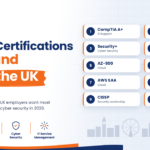
Certifications That Help You Land a Remote IT Job
Certifications serve as proof for remote employers of your technical skills without requiring continuous monitoring.
- IT Support: Gaining CompTIA A+ certification is an indicator of basic knowledge of hardware, operating systems, and troubleshooting.
- Cyber Security: The CompTIA Security+ certification is a measure of basic network security principles, threat analysis, and risk management.
- Cloud Infrastructure: CompTIA Cloud+ or Microsoft AZ-900 certifications show your understanding of cloud architecture and virtualization.
- Networking: Getting Cisco CCNA or CompTIA Network+ certification indicates your proficiency in configuring switches and routers and IP addressing.
How to Spot a Remote Job Scam
How can you recognize a remote job scam? As remote jobs are highly desired today, scammers are trying to catch job seekers using phishing emails. Protect yourself against these obvious signs of fraud:
Red Flag Checklist:
- Equipment Purchase Demands: Asking you to pay for home office equipment that will be reimbursed later.
- Chat-Only Interviews: Interviewing you using only chat apps like Telegram or WhatsApp without any video call.
- Generic Email Domains: Recruiting people using generic email domains (@gmail. com, @outlook. com) instead of a company email address.
- Unrealistic Compensation: Giving more than £50,000 for a starter support position without requiring any experience.
- Premature Financial Requests: Bank account details, national insurance numbers, or passports before offering an official job contract.
Always make sure that your employer is legitimate by searching on the UK Companies House Register and also checking the recruiter’s profile on LinkedIn. If you suspect fraud, report it directly to the UK’s national fraud and cybercrime reporting centre.
Final verdict
Acquiring real remote IT jobs UK-wide simply comes down to following the right path, getting credible certification and being strategic with it. Choose a discipline such as support or networking, get your basic certifications and develop some hands-on projects for proof of your capabilities. Jump-start your IT career UK-wide today by acquiring industry-recognized certifications and training courses from Impact IT Training.
Impact IT Training combines industry certifications with practical, hands-on experience to fast-track your UK remote IT career.
FAQs
- What are the best remote IT jobs in the UK?
Some of the best roles in remote IT include support jobs, cybersecurity jobs, cloud engineering jobs, network engineering, and software development jobs. Support is the fastest route to get into remote IT jobs, while cloud and cybersecurity are roles with better financial outlooks.
- Which remote IT roles hire the most?
IT support and service desk roles generate the highest volume of postings. Cloud engineering and cybersecurity follow closely due to nationwide talent shortages.
- Can you get a remote IT job with no experience?
Yes, but securing direct remote IT jobs for UK candidates is competitive. Starting in a hybrid service desk role builds proof of work faster before moving fully remote.
- Are remote IT support jobs common in the UK?
Yes, remote IT support jobs across the UK are very common. There are many Managed Service Providers who hire remote or hybrid desk agents for ticketing, system access, and user troubleshooting.
- How much do remote IT jobs pay in the UK?
Starting salaries range from £22,000 to £28,000. Mid-level specialists earn £38,000 to £58,000, while senior cloud and security engineers regularly earn £65,000 to £90,000.
- Which certifications help you get a remote IT job?
Vendor-neutral credentials like CompTIA A+ (Support), CompTIA Security+ (Security), AWS/Azure Fundamentals (Cloud), and Cisco CCNA (Networking) carry the most weight with UK recruiters.
- Are remote IT jobs fully remote or hybrid?
Both kinds exist; however, remote vs hybrid IT jobs UK market trends show that hybrid IT jobs prevail at the entry level. Cloud and software specialist roles tend to be fully remote.
- How do you spot a remote job scam?
Watch for red flags like paying upfront for hardware, chat-only interviews, personal recruiter email addresses, and premature requests for personal banking details.