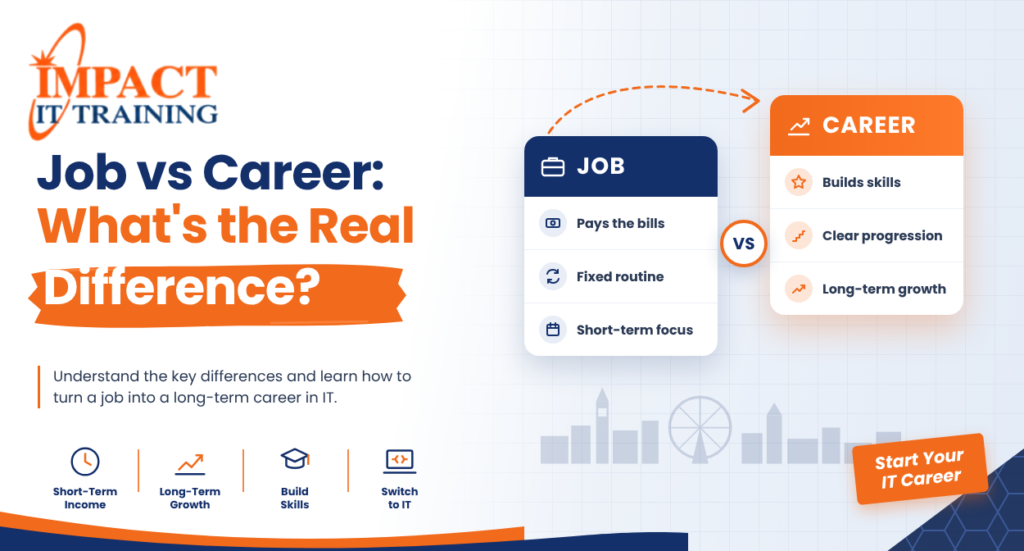
The difference between job and career comes down to direction: what is a job? A job is short-term paid work you do to earn income, while a career is a long-term path built through skills, progression, and purpose. Many people in London move from a job to a career by upskilling; IT is one of the fastest routes, with certified professionals earning significantly more than entry-level job-holders. Understanding the career or job difference is the first step toward lasting professional growth.
Realizing the basic difference between a job and a career is what will totally revolutionize your career path in the future. A job entails short-term activities, while a career involves continuous learning and development. In a highly competitive London employment market, there is a clear distinction between the many people applying for jobs in non-technical positions and the certified IT professionals.
Why This Question Matters More Than Ever in 2026
Many UK workers stay in jobs for years without ever seeing a path toward growth. As living costs rise, more people are thinking carefully about their daily work and considering whether they have just a job or a real career.
Knowing how employment types vary is the first step to changing your path. Entry-level, non-technical roles in London face rising saturation, leaving people feeling stuck. However, having certification in IT career paths that revolve around Cisco or Microsoft is an example of a visible career ladder. Knowing the professional trend will enable you to stop trading your time for a simple salary and begin investing in skills that will yield you dividends. Learn more about taking control of your future in our guide on How to Switch to an IT Career.
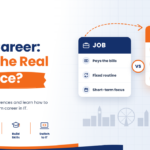
Job vs Career: Quick Comparison at a Glance
Before examining each concept in detail, it helps to contrast temporary employment against structured progression across key professional factors. The table below illustrates what a transactional role is compared to a structured professional path in practice.
| Factor | Job | Career |
| Purpose | Earn income now | Build long-term progression |
| Duration | Short-term/transactional | Long-term/cumulative |
| Skill Growth | Often stays flat | Grows through training & certification |
| Earning Potential | Capped, slow increases | Rises with experience + credentials |
| Example Path | Retail assistant, call centre agent | Network Engineer → Senior Network Engineer |
What Is a Job? Definition and Examples
When asking what a job is, the answer lies in its transactional nature. A job is a type of work carried out mainly in exchange for money regularly. Jobs usually lack a structured skill-building program and offer little or no career growth opportunities.
Key characteristics of a job include:
- Immediate Payoff: Selected mainly out of financial necessity to cover immediate living expenses.
- Role Types: Mainly found in entry-level, hourly, administrative, or contractual roles.
- Limited Requirements: Usually does not require any specialized certification in any industry or training programs.
Verdict: A job pays the bills today but not tomorrow. Understanding this job career difference helps you evaluate whether your current work supports your long-term goals.
What Is a Career? Definition and Examples
A career is a connected series of professional roles, achievements, and learning experiences that compound over time. Rather than moving sideways from one task-based role to another, a career represents purposeful momentum toward greater expertise, responsibility, and earning potential.
Key characteristics of a career include:
- Deliberate Investment: Gained via practical experience, professional training, and industry qualifications.
- Defined Progression: In industries such as IT, career progress is sequential – Junior Engineer → Network Engineer → Senior Network Engineer.
- Compounding Value: Each project, skill set, and certification earned directly adds to your market value.
Verdict: A career compounds each year builds directly on the foundation of the last. To see how structured learning forms the foundation of a modern career path, visit Impact IT Training.
The Real Differences Between a Job and a Career
The main difference between a job and a career is the purpose behind them. When considering the job-career distinction, there are five major differences between transactional work and career building:
- Mindset: A job is based on surviving the current week, while a career is based on investing in the future.
- Structure: Jobs often have a simple structure with few chances for getting promoted. Careers have clear steps for advancement (starting position → middle position → advanced position)
- Training & Upskilling: Most job training ends after the first introduction to the job. Career growth requires ongoing skill mastery through industry certifications and practical technical experience.
- Income Growth: Pay for jobs usually keeps up with regular increases in prices. You can make much more money in your career when you get specialized qualifications and show that you can solve tougher problems.
- Industry Perspective: Shifting from a job to a career requires moving from reactive task completion to active personal skill management.
Verdict: A job and career are differentiated by specific training and objectives, not titles.
Signs You’re Stuck in a Job, Not Building a Career
It is quite easy to stay with a company for years without realizing that your progress has stopped. Understanding the career or job difference will help you understand your current position:
- You have been doing the same thing every day without improving your technical knowledge.
- Your annual pay raises only match inflation and do not consider your growing skills.
- There is no obvious next job or way to get promoted in your department.
- Your boss has never supported or paid for you to get professional certificates or to improve your skills.
If you can relate to these points about your daily routine, it might be a good idea to shift to a growing industry.
How to Turn Your Job Into a Career (IT Career-Switch Path)
Transitioning from the static state demands a practical path. The following is how you will achieve bridging the gap between job and career and stepping into a fast-growing industry:
- Identify a High-Demand Sector: Select a sector that has high and enduring hiring demands. IT is still one of the most durable sectors in the UK.
- Gain Industry-Recognized Certifications: This will involve obtaining certifications from reliable sources such as Cisco and Microsoft that demonstrate practical skills.
- Focus on Hands-On Experience: Gain practical skills by working in live labs rather than just reading about theory.
- Follow a Structured Pathway: Use organized training programs to show a simple way to move from starting jobs to higher-level engineering jobs.
For a deeper dive into why technical skills matter, read our breakdown on The Importance of IT Courses in the Modern Workforce.
Why IT Is One of the Best Careers to Switch Into
When evaluating options to differentiate between job and career opportunities, Information Technology stands out as one of the most accessible and lucrative fields for career changers.
- High UK Market Demand: Businesses of all sizes need skilled workers to protect networks, manage cloud services, and keep important server systems running.
- Transparent Advancement: In the tech field, it’s easy to see how you can move up. Your progress is based on your skills and qualifications, not office politics.
- Accelerated Timelines: Hands-on training programs help motivated people move into IT jobs much more quickly than regular degree programs that take several years.
Exploring the dynamics of technology demonstrates how quickly practical skills translate into measurable income growth.
Explore IT Career Switch Packages →
How Impact IT Training Helps You Make the Switch
Moving from static employment to a high-growth technical trajectory requires dedicated instruction and practical support. Impact IT Training offers organized courses for people in London who want to change their careers.
- Real Equipment Labs: Training involving the use of real-world Cisco routers, switches, and enterprise servers.
- End-to-End Course Packages: Programs designed to train learners from basic IT support to becoming network architects.
- Post-Course Technical Guidance: Further assistance for candidates with their initial technical implementation in their new positions.
Understanding the practical distinction between static tasks and continuous development is key. Real growth happens when you invest in structured, real-world skills.
Book Your IT Career Switch Consultation →
Conclusion
Changing from a transactional position to a dynamic career demands effort, beginning with the development of skills in high-demand professions such as IT. By switching from a repetitive task to a recognized certification, you ensure your career growth and break free from a cycle of flat wages.
Impact IT Training bridges dead-end jobs and tech careers using hands-on labs, recognized certifications, and London-focused pathways.
FAQs
- What’s the actual difference between a job and a career?
A job is transactional work for immediate pay, whereas a career is long-term, compounding professional growth.
- Can any job eventually become a career?
No, jobs lacking structured skill development, formal training, and promotional ladders usually remain static tasks.
- Why does this distinction matter when planning a career switch?
It shifts your focus from surviving on short-term paychecks to investing in high-value, future-proof skills.
- How do you know if you’re in “just a job” or building a career?
If your skills, responsibilities, and pay remain stagnant without a clear promotional path, it is a job.
- What steps turn a job into a long-term career in IT?
Identify a high-demand sector, earn industry-recognized certifications, and gain hands-on lab experience.